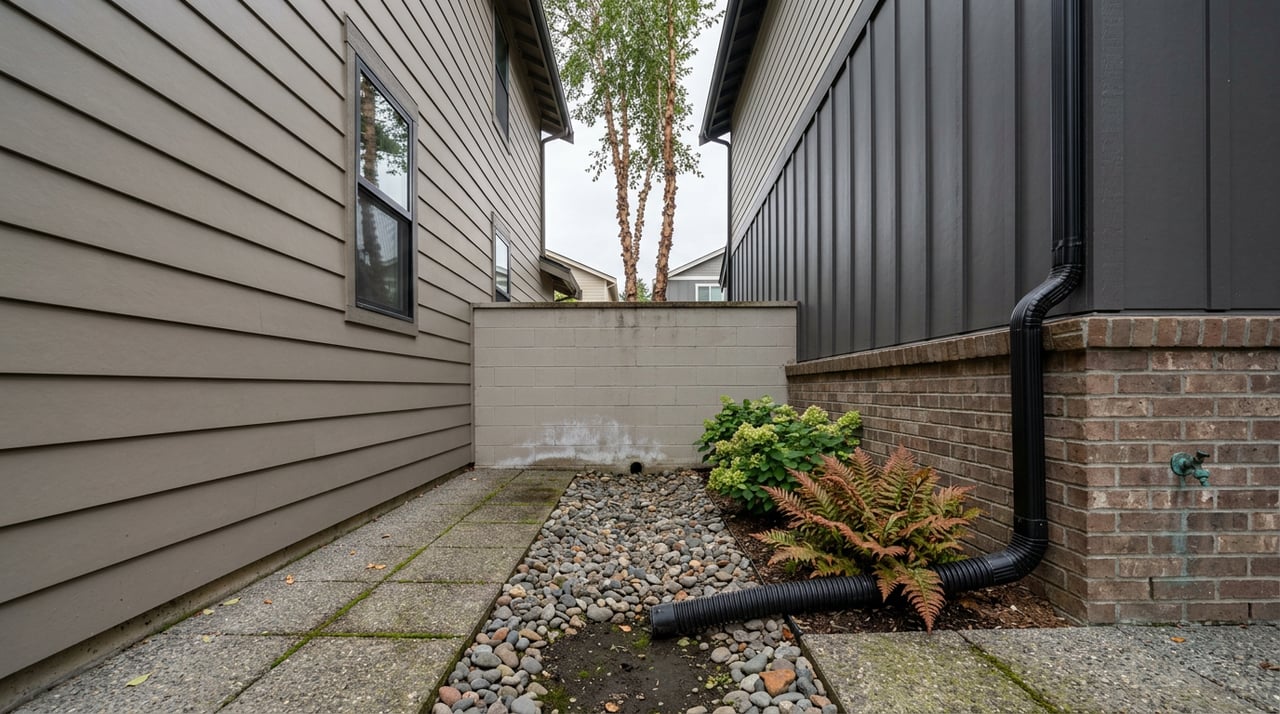
Stand in the gap between two "tall and skinny" homes in The Nations and you can almost touch both exterior walls at once. In many of the townhome pairs built across this neighborhood, that gap runs six to eight feet, just enough room for two sets of downspouts to empty into a strip of yard that never gets full sun and rarely dries out. Walk a few of these side yards after a hard Tennessee rain and you will see standing water sitting directly against foundation walls that were poured only a few years ago.
That gap is where the real risk in a Nations new construction purchase lives. Not in the finish package, not in the kitchen island, but in eighteen inches of soil most buyers never think to ask about.
The price gap isn't a neighborhood discount. It's a construction-era discount.
Buyers comparing The Nations to Sylvan Park usually explain the price difference the same way: Sylvan Park is more established, quieter, closer to full built-out. Based on active listings tracked this year, Sylvan Park's median sits close to $985,000 against roughly $585,000 in The Nations, a gap of $350,000 to $400,000. That framing isn't wrong, but it's incomplete.
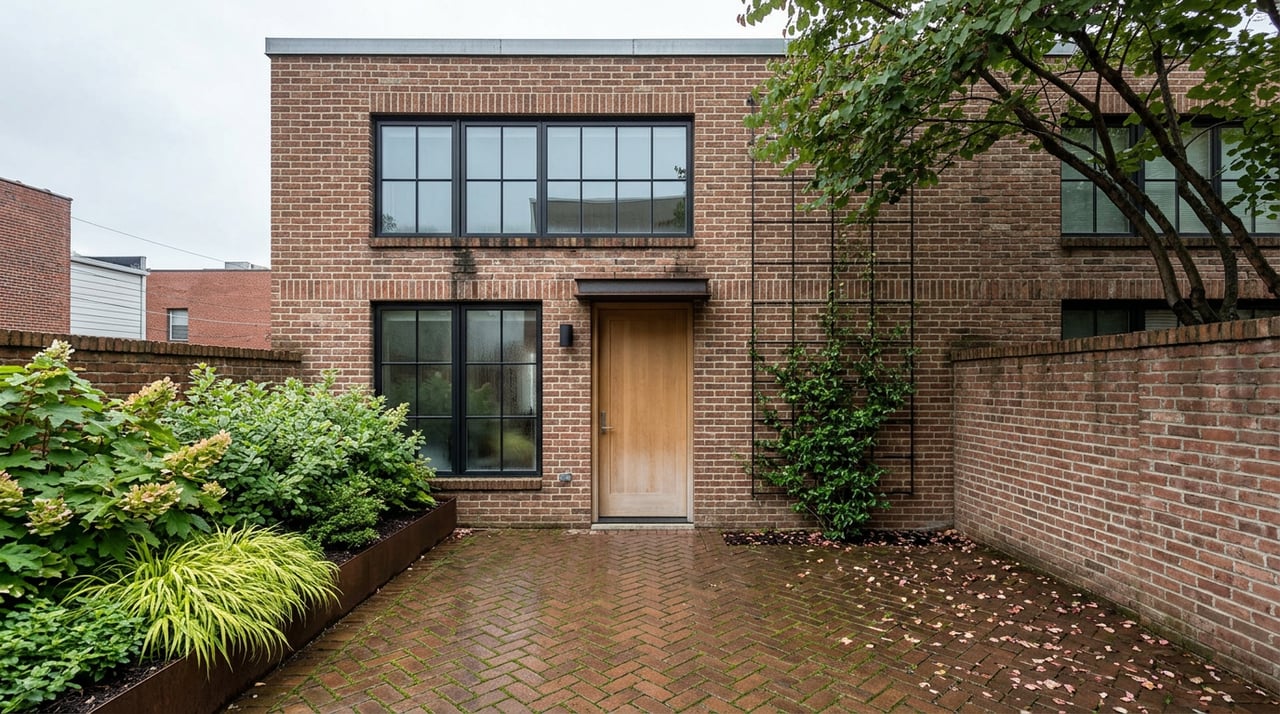
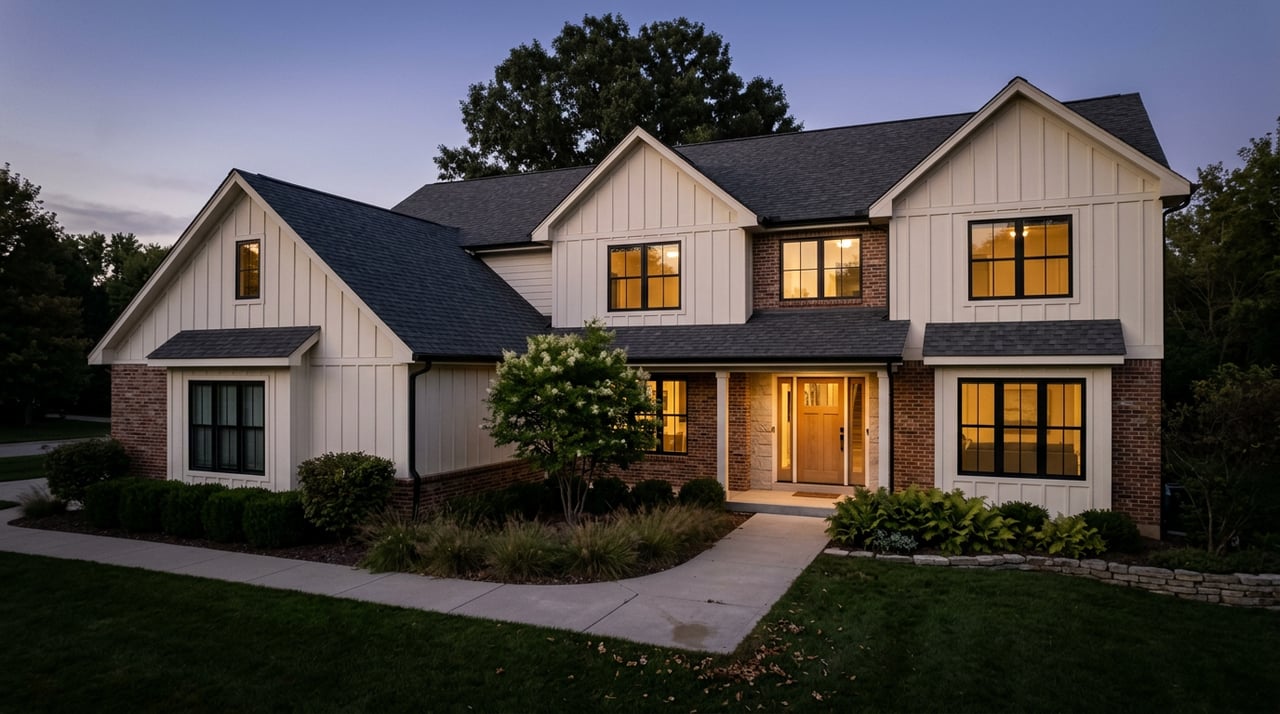
A meaningful share of that gap is compensation for something more specific: the construction-quality variance produced by a decade-long build boom that ran roughly 2015 through 2022. Some of those townhomes were engineered carefully. Some were built fast to meet demand, with drainage and grading treated as an afterthought behind a finish package designed to look identical on listing day. The house with the herringbone floors and the house with the standing water problem can have the same photos.
Why a normal walkthrough won't catch it
A builder's final walkthrough is built to show you what's finished, not what's buried. Once drywall goes up, the framing, the plumbing runs, and the drainage detailing behind the walls are sealed away for good. A structural flaw or a poorly routed downspout line becomes invisible until it turns into a repair bill years later.
Buyers sometimes assume the city's own inspection process is that safety net. It isn't, at least not in the way most people picture it. Metro codes inspectors do perform rough-in inspections, but a codes officer is checking for minimum legal compliance, often in a matter of minutes, across dozens of active sites in a single day. A private inspection is a different exercise entirely, typically running several hours and documenting craftsmanship issues a pass/fail codes check was never designed to catch. If you're buying a home that's still under construction, a pre-drywall inspection is the one point in the process where you can actually see how the walls were built before they disappear behind paint.
The mechanics behind the standing water
The problem in The Nations isn't mysterious once you understand the math. A traditional single-family lot used to hold one house surrounded by open grass, and most rainfall soaked into that yard naturally. Modern infill puts two large-footprint, multi-story homes on that same lot, adds driveways and patios on top, and leaves almost no open ground to absorb anything. Two oversized rooflines now funnel thousands of gallons into a narrow side yard instead.
Done right, that side yard has an intentional depression tied to underground piping that carries water out to the street or a drainage easement, along with a sump pump and battery backup in the crawlspace as a second line of defense. Done poorly, the downspouts simply dump at the corner of the foundation, and the water finds its own way. It's also worth checking the grade of the neighboring lots. If your home sits even slightly lower than the new build next door, that neighbor's runoff is heading toward your yard by default, regardless of how well your own house was engineered.
How the neighborhood got built this way
None of this happened by accident. The tall-and-skinny era in The Nations traces back to 2010, when the state amended the Horizontal Property Act to let multiple owners share a single parcel without a formal subdivision. That change, combined with depressed post-flood property values in a neighborhood still recovering from that year's flooding, made it possible to build two distinct multi-story homes on lots that had held one modest house for decades. What followed was one of the fastest housing transformations in Nashville, visible today in the 200-foot mural by Australian artist Guido van Helten that overlooks the neighborhood, a portrait of longtime resident Lee Estes watching over a rooftop line of homes built long after his own arrived.
What just changed, and why it raises the stakes rather than lowering them
In August 2025, Metro Council approved the Nations Neighborhood Plan, a rezoning covering roughly 300 acres of the neighborhood. It allows up to four homes on a standard residential lot, limits most new residential buildings to two stories, permits accessory dwelling units, and adds new stormwater drainage and tree canopy requirements meant to prevent the worst infill patterns from repeating.
That last part matters more than it sounds. The drainage improvements built into the plan are long-timeline fixes, the kind that show up over years, not months. In the meantime, more lots are now legally eligible for the same dense building pattern that created the drainage problem in the first place, just with twice as many potential structures per lot instead of two. For a buyer evaluating a specific block, that means the next few years are likely to bring more of exactly this construction type before the infrastructure requirements have time to catch up with it. The rezoning is a long-term improvement. It is not a reason to relax due diligence on a home being built or sold this year.
The neighborhood is also not slowing down. The 393-unit Camden Nations development is under construction on the block anchored by Centennial Boulevard, 51st Avenue, and Louisiana Avenue, directly behind 51st Deli and the Midnight Oil taproom. Whatever happens with individual lot-level construction, the main corridor around 51st and Centennial, home to neighborhood fixtures like Frothy Monkey and the walk-up window at Headquarters Coffee, is only getting busier.
What to actually check before you write an offer
A few specific steps separate a well-informed offer from an expensive surprise:
- Request a pre-drywall inspection if the home is still under construction, not just a final walkthrough after it's finished.
- Ask specifically about drainage, foundation grading, HVAC, and roof condition, since surface finishes tell you almost nothing about what's behind the walls.
- Check the FEMA flood map for the exact address, not just the general area, and pull any prior insurance claims history tied to that property.
- Look at the grading of the neighboring lots, not just the home you're buying, since runoff doesn't respect property lines.
- Ask when the home was built. A 2016 spec build, a 2021 boom-era build, and a home constructed under the 2025 rezoning are three different risk profiles wearing similar finishes.
None of this is a reason to avoid The Nations. It's a reason to treat the price gap for what it actually is: a market pricing in real, inspectable risk rather than pricing in a lesser neighborhood.
Questions Buyers Often Ask
What's the real difference between a city codes inspection and a private home inspection? A codes inspector is verifying baseline legal compliance, often in a few minutes per site, across a heavy daily workload. A private inspector works only for you, typically spending several hours documenting craftsmanship and structural details a pass/fail codes check isn't designed to catch.
How do I check whether a specific address has a flood or drainage history? Pull the FEMA flood map for that exact address and request any prior insurance claims history tied to the property. Treat this as standard due diligence for any Nations purchase, not an extra step.
Does the 2025 rezoning mean construction quality will improve right away? Not immediately. The plan's stormwater and tree canopy requirements are long-timeline improvements, while the density allowances take effect now. Evaluate each block and each lot on its own merits rather than assuming the new rules have already changed what's being built.
If you're weighing a new construction purchase in The Nations, or thinking through how the 2025 rezoning affects a lot you already own, Eddie Ferrell has spent years advising buyers, builders, and developers through exactly these decisions across Nashville's fastest-changing neighborhoods. Let's Connect before you write the offer, not after the inspection.